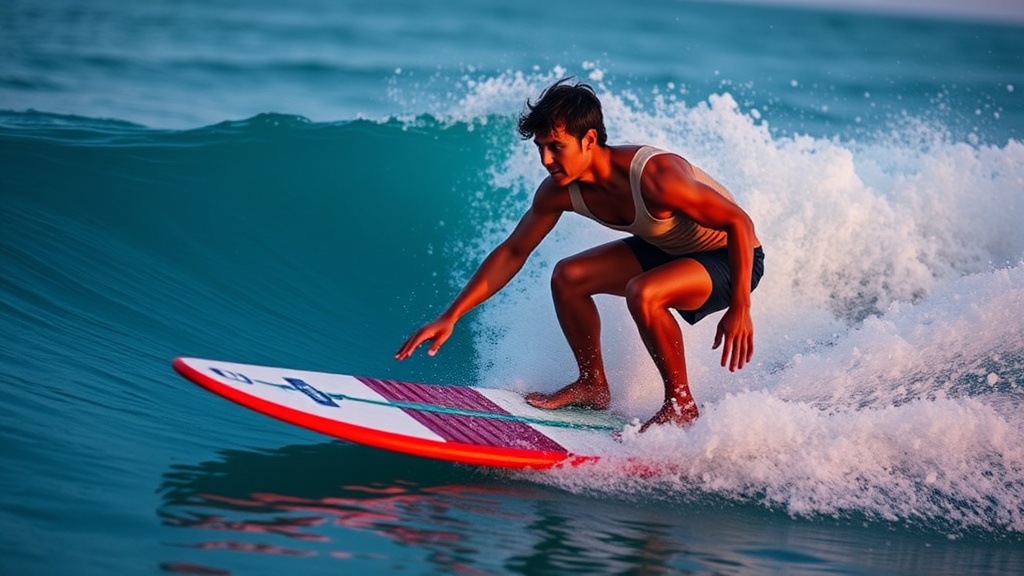
5 key Training Exercises Every Skimboarder Needs to Master
Single-Leg Balance Drills for Board Control
Explosive Plyometric Box Jumps for Air Height
Sand Sprints to Build Wave-Chasing Speed
Core Plank Variations for Stability on the Board
Resistance Band Rotations for Powerful Turns
Skimboarding demands explosive power, ironclad balance, and the kind of reflexes that separate weekend warriors from riders who actually own the beach. This post breaks down five training exercises that build the specific muscle groups and movement patterns skimboarding requires. You'll learn exactly what to train, how often, and why each movement translates directly to better performance on the sand and water.
What Muscles Should You Train for Skimboarding?
The short answer: everything from your ankles to your core. Skimboarding engages your posterior chain, hip stabilizers, and fast-twitch muscle fibers in ways that traditional gym routines rarely touch. Your calves fire constantly to maintain board contact. Your quads absorb impact. Your obliques rotate your torso through every turn.
Here's the thing — most riders make the mistake of training like surfers or skateboarders. Wrong move. Skimboarding involves unique demands: running starts on unstable sand, instantaneous weight shifts, and the ability to decelerate then re-accelerate in milliseconds. That requires a specialized approach.
The Posterior Chain Priority
Your hamstrings and glutes power the sprint onto the board. Weak glutes mean a weak drop. Period. Focus on exercises that strengthen hip extension — deadlifts, kettlebell swings, and Romanian deadlifts should form the backbone of any skimboarder's program.
Worth noting: sand provides an unstable surface that mimics actual skimboarding conditions. Training barefoot on sand (when possible) activates more stabilizing muscles than pavement or gym floors ever will.
How Do You Build Balance for Skimboarding?
Balance training for skimboarding isn't just about standing on one leg — it's about training proprioception under load and during movement. The board moves. The water moves. You need neural pathways that adjust without conscious thought.
Single-Leg Romanian Deadlifts
Grab a kettlebell — 16kg to 24kg works for most riders — and stand on your right leg. Hinge at the hips, extending your left leg behind you while lowering the weight toward the ground. Keep your spine neutral. Return to standing. That's one rep.
Perform 3 sets of 8-10 reps per leg, twice weekly. The unilateral loading mirrors the demands of balancing on a moving board while your body shifts weight from front foot to back foot.
Bosu Ball Squats with Rotation
Stand on a Bosu Balance Trainer (dome side up), feet shoulder-width apart. Lower into a squat. At the bottom, rotate your torso 45 degrees left, then right, then stand. The instability forces micro-adjustments — exactly what your ankles and knees make hundreds of times per session on the water.
Start with bodyweight only. Once you can complete 3 sets of 12 reps without wobbling, add a light medicine ball held at chest height.
What Are the Best Exercises for Skimboarding Speed?
Speed on a skimboard comes from two places: the sprint onto the board and the explosive pop needed for tricks. Both require power development — not just strength, but strength expressed quickly.
Box Jumps with Stick Landing
Find a plyo box — 18 to 24 inches works for most athletes. Stand facing it, feet hip-width apart. Drop into a quarter squat, then explode upward, driving your arms forward. Land softly with both feet simultaneously, knees tracking over toes. Hold the landing for 2 full seconds before stepping down.
The "stick" portion trains eccentric control — the ability to absorb force and stabilize. That's exactly what happens when you land a shove-it or ride out a sketchy wave transition.
Perform 4 sets of 5 reps, resting 90 seconds between sets. Quality beats quantity here. If your form breaks down, stop.
Sand Sprints
Nothing replicates the skimboarding start like sprinting on sand. Find a 20-yard stretch of dry, loose sand. Sprint from a standing start, focusing on driving your knees high and pumping your arms aggressively. Walk back for recovery.
Run 8-10 sprints per session, resting 2-3 minutes between efforts. The sand's resistance builds power while reducing impact stress on your joints compared to pavement sprints. Plus, you're training on the exact surface you'll compete on.
| Exercise | Sets x Reps | Frequency | Primary Benefit |
|---|---|---|---|
| Single-Leg RDL | 3 x 8-10/leg | 2x weekly | Balance + posterior chain |
| Bosu Ball Squats | 3 x 12 | 2x weekly | Proprioception + ankle stability |
| Box Jumps (stick) | 4 x 5 | 2x weekly | Explosive power + landing control |
| Sand Sprints | 8-10 x 20yd | 2x weekly | Acceleration + sport-specific conditioning |
| Plank with Shoulder Taps | 3 x 30 seconds | 3x weekly | Core anti-rotation stability |
Medicine Ball Rotational Throws
Stand perpendicular to a concrete wall, holding an 8-10 pound medicine ball at chest height. Rotate your torso away from the wall, loading your back hip. Explosively rotate toward the wall, releasing the ball at chest height. Catch it on the rebound, reset, repeat.
This movement trains rotational power — the same force that drives turns, wraps, and snap maneuvers on the water. Perform 3 sets of 6 throws per side, resting 60 seconds between sets.
Do You Need Special Equipment for Skimboarding Training?
Not really. A basic plyo box, a kettlebell or two, and a medicine ball cover 80% of effective skimboarding training. The beach itself provides the best training surface money can't buy.
That said, certain tools accelerate progress. A Bosu Balance Trainer (mentioned earlier) offers instability training that's hard to replicate otherwise. Resistance bands — particularly loop bands for lateral walks — strengthen hip abductors that stabilize your stance on the board.
The catch? Equipment doesn't replace consistency. Twenty minutes of focused bodyweight work beats an hour of scattered gym time. Riders who train 4-5 days per week — even short sessions — see faster skill transfer than weekend warriors who crush themselves once.
Training Schedule Template
Here's a realistic weekly structure that won't burn you out:
- Monday: Strength focus — deadlifts, single-leg RDLs, core work
- Tuesday: Speed/power — box jumps, med ball throws, sand sprints
- Wednesday: Active recovery — yoga, swimming, or light skating
- Thursday: Balance focus — Bosu work, single-leg exercises, board balance drills
- Friday: Sport-specific — beach sprints, practice drops, shadow skating
- Saturday: Ride day — apply everything on the water
- Sunday: Full rest or light mobility
How Does Core Strength Impact Skimboarding Performance?
A weak core means wobbles, sketchy landings, and missed waves. Your core isn't just abs — it's the entire cylinder of muscles surrounding your spine, from your pelvic floor to your diaphragm. When these muscles fire together, they transfer force from your legs through your upper body and out to the board.
Plank with Shoulder Taps
Assume a push-up position, hands directly under shoulders, body forming a straight line from head to heels. Without rotating your hips, lift your right hand and tap your left shoulder. Return to start. Repeat on the opposite side.
The anti-rotation component mimics the demands of riding — your core must resist twisting forces while your limbs move independently. Perform 3 sets of 30 seconds (as many taps as possible with good form).
Dead Bugs
Lie on your back, arms extended toward the ceiling, legs raised with knees bent at 90 degrees. Slowly lower your right arm and left leg until they hover just above the floor. Return to start. Repeat with opposite limbs.
This exercise trains core stability while the extremities move — exactly what happens during a wrap or when adjusting foot position mid-ride. It's also spine-friendly, unlike crunches or sit-ups that compress your lower back.
"The best skimboarders I know train like athletes, not like surfers who happen to ride a board. They're in the gym year-round, not just when beach season approaches." — Pro skimboarder and trainer, Laguna Beach
Hanging Knee Raises
Grab a pull-up bar with an overhand grip, arms fully extended. Without swinging, draw your knees toward your chest. Lower with control. That's one rep.
This builds the hip flexor strength needed for tucking into airs and maintaining compressed stances during technical maneuvers. Start with 3 sets of 8-10 reps. Once that's easy, straighten your legs for full hanging leg raises.
Can You Train for Skimboarding Without Water Access?
Absolutely. While nothing replaces actual water time, dryland training can maintain — even improve — your physical readiness during off-seasons or when you're landlocked. Many serious riders live inland and only hit the coast monthly.
Focus on the movements outlined above. Substitute sand sprints with hill sprints (steeper incline = more power development). Practice your drop technique on grass using an old board or even a piece of cardboard. Work on pop-up speed from a prone position.
Some of the best skimboarders in the world — riders like Austin Keen — grew up training hundreds of miles from the ocean. They built athletic foundations that translated immediately when they finally hit the waves.
Skateboarding Cross-Training
A standard skateboard serves as the ultimate skimboarding simulator. Practice flatground tricks, work on your balance, and train your eyes to spot landing zones. The board control transfers directly — though remember, sand and water behave differently than concrete.
Worth noting: longboarding doesn't offer the same benefits. The stability of a longboard actually works against skimboarding's demand for quick, reactive foot placement. Stick to standard popsicle-stick shapes for cross-training.
Train smart. Ride hard. The exercises above build the physical foundation — but the water teaches the rest. See you at the shoreline.