Fix Your Skimboard Footwork and Balance

Improving Your Edge Control and Balance
Ever wonder why your board feels like it's sliding away from you right when you need to make a sharp turn? It's a common frustration. This post breaks down the mechanics of foot placement, weight distribution, and the subtle shifts required to keep your board under you during high-speed maneuvers. We'll look at the physical adjustments that change how you interact with the water's surface.
Skimboarding isn't just about speed; it's about how you manage the contact point between your feet and the board. If your weight is too far back, the nose will pop up and you'll lose momentum. If you're too far forward, the board will dive. Finding that middle ground is what separates a beginner from someone who can actually carve a wave. It's all about constant, micro-adjustments.
How do I stop my board from sliding out?
The most frequent reason for a wipeout is uneven weight distribution. When you're approaching a shore break or a heavy swell, your center of gravity needs to stay low. If you stand too tall, any small ripple in the water will knock you off balance. Think of your knees as shock absorbers. Instead of stiff legs, keep them slightly bent and ready to react to the water's movement.
To keep the board stable, you need to focus on your pressure points. Most riders tend to put too much weight on their back foot when trying to turn. This causes the front of the board to lift—a move that usually results in a faceplant. Try to keep your weight centered over the middle of the board, then lean into your turns by shifting your hips rather than just your ankles. This keeps the board's edge engaged with the water.
A great way to practice this is by working on your stance. A wider stance generally provides more stability, but it can also limit your agility. You'll want to find a stance width that feels natural for your height and the specific board you're using. If you're using a shorter, more aggressive board, you might need a tighter, more precise stance to maintain control.
Can better foot positioning increase my speed?
Speed in skimboarding comes from how you direct your momentum. If your feet are constantly fighting to stay on the board, you're wasting energy that should be going into your glide. By optimizing your foot placement, you can direct more force into your turns, which naturally builds speed. A well-placed foot can act as a pivot point, allowing you to whip the board around with minimal effort.
When you're planning a long glide, you want to minimize drag. This means keeping your feet positioned so the board stays flat against the water for as long as possible. If you start carving too early or too aggressively, you'll create drag and lose that precious momentum. Watch how professional riders maintain a flat profile during long glides—they aren't fighting the water; they're working with it.
For more technical details on board physics and water resistance, you can check out resources from the SurferToday community, which often discusses the mechanics of board control in various water sports. Understanding the way water interacts with the board surface can help you anticipate how your weight shifts will affect your speed.
What drills help with board stability?
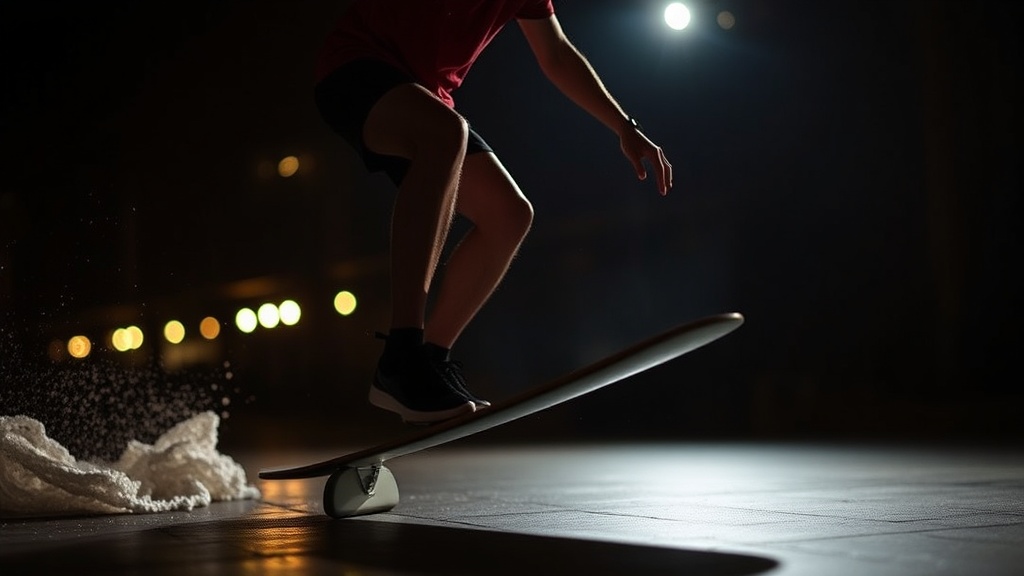
You can't just rely on the water to get better; you need to train your proprioception (your body's ability to sense movement and position). On land, practicing balance on a wobble board or a balance beam can do wonders for your stability. It builds those tiny stabilizer muscles in your ankles and feet that you don't even realize you're using until they fail you.
Another useful drill is the "static hold." While on your board (in shallow water or on a flat surface), try to maintain a specific pose for thirty seconds without wobbling. This builds the core and leg strength necessary to hold your position during a heavy swell. If you can stay stable while the water is moving under you, you'll have much more control when the action picks up.
Focusing on your core is also a huge part of this. A strong core allows you to transfer energy from your upper body to your lower body without losing your balance. If your core is weak, your upper body will sway, and that sway will translate directly to your feet, causing the board to slip. This is why many athletes look toward strength training to supplement their technical skills.
Remember, balance isn't a static state—it's a constant negotiation with the water. You're never truly "still" while skimming; you're always adjusting. Embrace that movement. The more you try to be rigid, the more likely you are to fall. Stay fluid, stay low, and keep your eyes a few feet ahead of where you're actually heading. This gives your brain more time to react to the changes in the water's surface before they actually hit your feet.