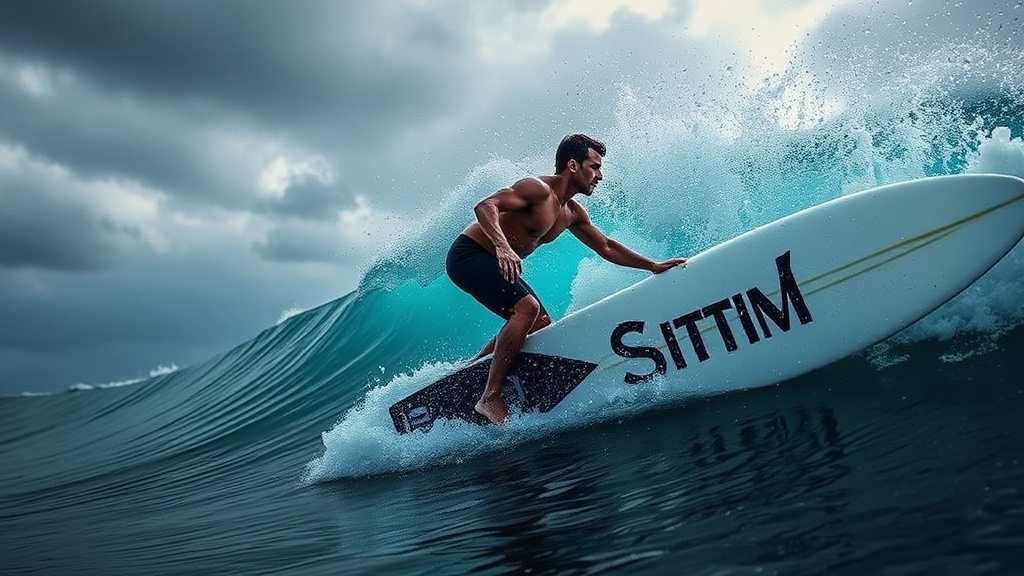
Why Your Core Stability Dictates Your Skimboard Performance
The Hidden Connection Between Midsection Strength and Wave Riding
Studies on human kinetic chains show that nearly 40% of power transfer in explosive movements originates from the trunk. If your center of gravity isn't controlled, your limbs—no matter how strong—won't be able to execute precise maneuvers. For skimboarders, this isn't just about looking good; it's about the ability to stay upright when the water hits the board at high velocity. This post breaks down why core stability is the foundation of your ride and how you can build a chassis that survives the impact of the shorebreak.
When you're out on the sand, you aren't just using your legs to pump or carve. You're using your entire body to manage torque. Every time you lean into a turn, your core acts as the bridge between your upper body's weight shift and your lower body's reaction. Without a stable center, you'll find yourself overcompensating with your ankles or even your shoulders—which is a fast track to a strain or a fall. We're looking at the mechanics of how stability translates to speed and control.
Does a Strong Core Improve Skimboarding Speed?
Speed in skimboarding isn't just about how fast you run before the drop; it's about how much energy you can keep in the board during a maneuver. A weak core leads to "energy leaks." Imagine trying to push a heavy car—if your frame is flimsy, the force you exert won't move the car efficiently. The same happens on the water. If your midsection is soft, the energy from your pump gets lost in your torso instead of being transferred into the board's edge.
By developing functional stability, you ensure that every ounce of effort you put into a carve stays in the water. This means you'll maintain momentum longer during long glides. A research paper from the National Center for Biotechnology Information highlights how core stability influences balance and postural control in high-impact environments. For us, that means staying upright through the choppy sections of a wave.
- Reduced Energy Leakage: A rigid midsection keeps the board responsive.
- Better Torque Management: You can rotate your hips and shoulders without losing your center.
- Increased Reaction Time: A stable core allows for faster micro-adjustments during unexpected water shifts.
What Exercises Build Stability for Extreme Sports?
You can't just do endless sit-ups and expect to become a better rider. Sit-ups are a linear movement; skimboarding is a rotational and multidirectional sport. You need to train for stability in various planes of motion. This involves much more than just basic abdominal strength—it's about the deep stabilizer muscles that hold your spine in place under stress.
<The following table outlines three types of movements that actually matter for your training sessions:
| Movement Type | Example Exercise | Why It Matters |
|---|---|---|
| Anti-Rotation | Pallof Press | Teaches you to resist being knocked off balance. |
| Dynamic Stability | Single-Leg RDL | Simulates the uneven surface of the water and sand. |
| Rotational Power | Medicine Ball Slams | Builds the ability to snap through a turn. |
Don't ignore the posterior chain either. Your glutes and lower back are part of your core. If these are weak, your lower back will take the brunt of the impact when you land a jump or hit a heavy swell. Incorporating movements like the deadlift or kettlebell swings can help build that foundational strength. For more on athletic development, checking out resources at NSCA can provide deeper insights into sports-specific programming.
Can You Train Core Strength Without a Gym?
The truth is, you don't need a fancy weight room to build a resilient midsection. Most of the best movements for stability can be done on the beach or in a living room. The goal is to challenge your balance and your ability to resist unwanted movement. A plank is a fine start, but a side plank with a leg lift or a dynamic mountain climber will serve you much better in the long run.
When you're training at home, focus on time under tension. Instead of rushing through reps, hold the position. Feel the muscle engagement. This builds the endurance needed for those long sessions where you're out in the waves for two or three hours straight. If you can't hold a stable position on dry land, you definitely won't hold it when a wave is trying to toss you sideways.
Try to incorporate these drills at least three times a week. It's not about how much weight you lift, but how much control you maintain. A controlled, slow movement is often much more difficult—and more effective—than a fast, sloppy one. This is where the real skill development happens.
Remember, your core is the anchor of your performance. If the anchor is weak, the ship—or in this case, your board—is going to drift. Focus on the stability of your spine and the strength of your rotational muscles to see a direct improvement in your ability to hold an edge and ride through heavy water.