Build a Resilient Core for Explosive Skimboard Maneuvers
Plank Variations for Stability
Rotational Power Drills
Dynamic Balance Movements
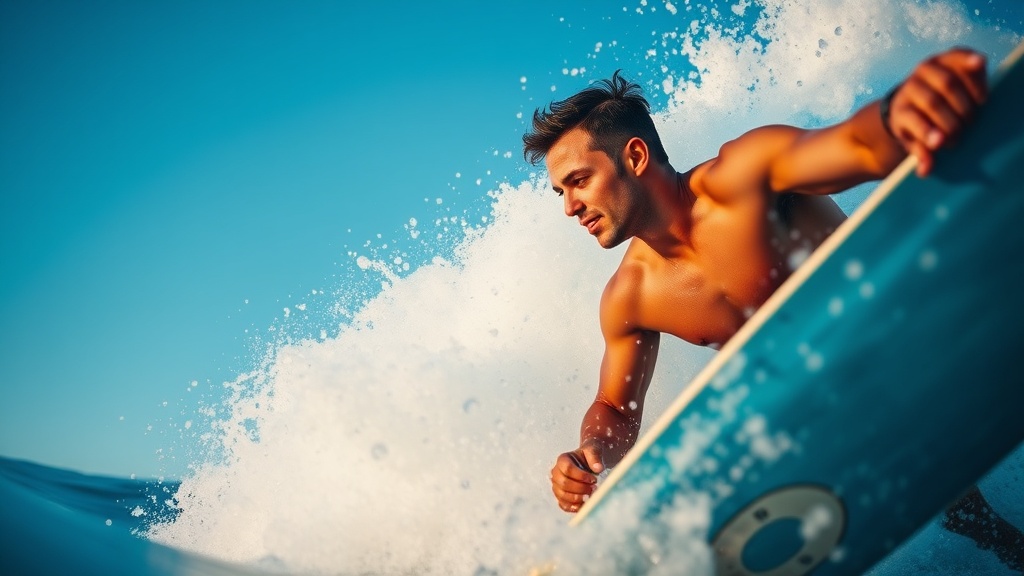
The saltwater spray hits your face just as you kick off, and suddenly, the board is beneath you, skimming across the thin film of water. You feel the rush of a sharp turn—a quick snap that requires every ounce of stability in your midsection. To pull off those high-speed carves and maintain balance when the wave breaks, you need more than just leg strength. You need a core that doesn't buckle under pressure. This post breaks down the specific muscle groups and training methods required to build a stable, reactive center for high-performance skimboarding.
Why is core strength important for skimboarding?
A strong core provides the stability needed to transfer power from your legs to your upper body during rapid directional changes. When you're performing a sharp cut or trying to stay upright on a choppy surface, your midsection acts as the bridge between your upper and lower limbs. Without that stability, you'll feel "disconnected" from your board, leading to lost edges and wiped-out sessions.
Think about the physics of a turn. Your legs push against the water, but if your torso flops around like a wet noodle, that energy is lost. A stable core allows you to direct that force precisely. It’s the difference between a messy, uncontrolled slide and a crisp, professional carve. It also helps prevent common injuries—like lower back strains—that happen when you're constantly twisting and snapping your body to react to the water.
I've seen plenty of riders with great legs who still struggle because their midsection is weak. They have the engine, but the chassis is too shaky to handle the speed. If you want to move from beginner carving to advanced maneuvers, you have to treat your core as a primary driver of movement, not just an afterthought.
What are the best core exercises for skimboarders?
The best exercises for skimboarders are those that combine rotational strength with stability and explosive movement. You don't just need a "six-pack"; you need functional strength that translates to the sand and water.
I usually recommend a mix of static holds and dynamic, rotational movements. Static holds build the foundational endurance you need for long sessions, while rotational exercises mimic the twisting motions of a sharp turn. Here is a breakdown of the most effective training categories:
- Anti-Rotational Training: These exercises teach you how to resist unwanted movement. The Pallof Press is a fantastic example. It forces your core to stabilize against a lateral force, which is exactly what happens when a wave tries to knock you off balance.
- Rotational Power: To actually execute a turn, you need to be able to rotate with intent. Exercises like Russian Twists or Medicine Ball Slams build the explosive power required to snap the board around.
- Isometric Stability: These are the "hold" exercises. The Plank and Side Plank are classics for a reason—they build the deep internal stability that keeps your spine aligned during high-impact landings.
- Dynamic Core Integration: Moves like Mountain Climbers or Dead Bugs ensure your core works in tandem with your breathing and limb movement, which is vital for maintaining rhythm on the water.
If you want to see how these movements fit into a broader regimen, check out my previous post on optimizing skimboard performance through physical training. It goes deeper into how different muscle groups work together during a session.
The "Big Three" Movement Types
When you're planning your weekly workouts, don't just do a thousand crunches. That's a waste of time. Instead, aim for a balance of these three types of movement:
| Movement Type | Primary Goal | Example Exercise |
|---|---|---|
| Stability (Anti-Movement) | Resisting external forces | Plank, Pallof Press |
| Rotation (Dynamic) | Generating power for turns | Medicine Ball Twists, Woodchoppers |
| Endurance (Steady State) | Maintaining form over time | Hollow Body Hold, Bird-Dog |
It's also worth noting that your core strength is heavily influenced by your overall physical conditioning. If you're dehydrated, your muscle response time slows down, and your coordination suffers. I've written about how to hydrate for better focus and endurance, which is a huge part of maintaining that core engagement during a long day at the beach.
How can I train my core for explosive movement?
To train for explosive movement, you must incorporate plyometric and high-velocity rotational exercises into your routine. Purely slow, controlled movements build endurance, but they won't give you that "pop" needed for a sudden maneuver. You need to train your nervous system to fire quickly.
One way to do this is through weighted rotational movements. Take a kettlebell or a heavy medicine ball and perform controlled but fast rotations. The goal isn't just to move the weight, but to move it with intent and speed. This mimics the sudden shift in weight you make when you're trying to catch a wave or snap a turn. It’s about teaching your muscles to react to a sudden change in direction.
I've found that using a TRX suspension trainer is also incredibly effective. Because the resistance is constantly shifting, it forces your core to react to unpredictable tension. This is a direct parallel to the unpredictable nature of the ocean. You might think you're in control, and then a sudden swell or a change in the water's surface tension throws you off. A suspension trainer prepares you for that instability.
For those who want to get serious, looking into the principles of plyometrics can provide a scientific foundation for your training. It’s not just about being "strong"; it's about being "fast-twitch" strong.
Don't overlook the importance of the posterior chain. A lot of people focus solely on the "abs," but your lower back and glutes are part of your functional core. If your lower back is weak, your entire posture will collapse during a heavy carve. Incorporate deadlifts or kettlebell swings to ensure your entire trunk is capable of handling high-intensity loads.
A quick tip: when performing any of these exercises, don't hold your breath. It's common to hold your breath during a heavy lift, but in skimming, you're constantly breathing and moving. If you can't breathe while working your core, you won't be able to maintain your rhythm when the waves get intense. Practice "bracing" while maintaining a steady, controlled breath.
The goal is to build a body that is both a rock and a spring—solid when you need to hold a line, but reactive when you need to change it. Keep testing your limits, and don't be afraid to add weight as you get stronger. If the movement feels too easy, you aren't building the explosive power you need for those big sessions.